


As a supplier of Lace Ribbed Fabric, I often encounter customers asking how to make this unique fabric more stretchy. Stretchy fabrics are highly sought - after in the textile industry, especially in applications like lingerie, activewear, and high - fashion garments. In this blog, I'll share some effective methods based on my years of experience in dealing with Lace Ribbed Fabric.
Understanding the Nature of Lace Ribbed Fabric
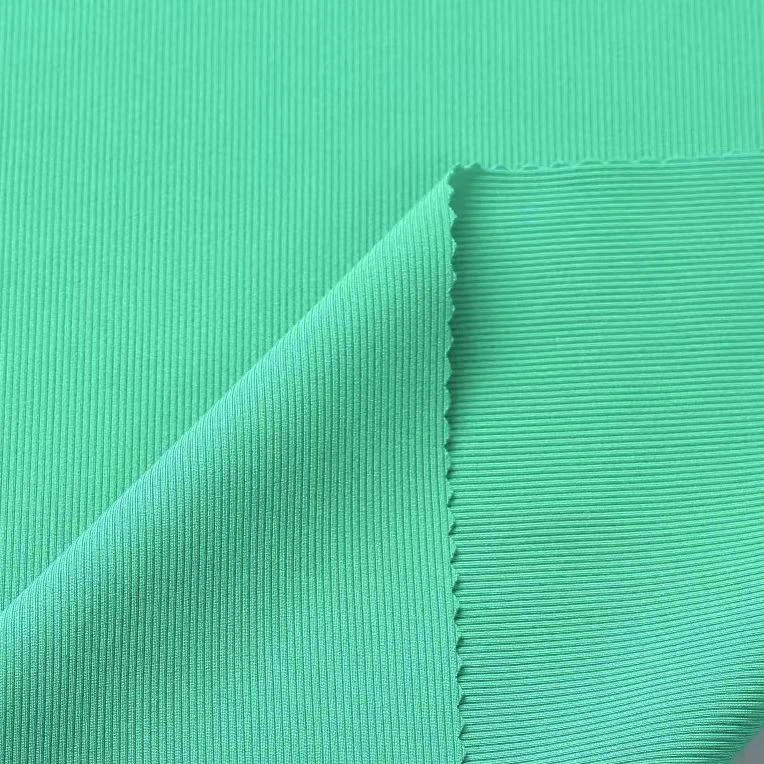
Before we start exploring ways to increase its stretch, it's crucial to understand what Lace Ribbed Fabric is. This fabric combines the delicate and intricate patterns of lace with the ribbing structure. The ribbing is created by alternating rows of knit and purl stitches, which give the fabric its characteristic vertical lines and some inherent elasticity. However, the lace part can sometimes limit the overall stretch due to its more rigid or less elastic nature compared to the ribbed sections.
1. Fiber Selection and Blending
One of the most fundamental ways to enhance the stretch of Lace Ribbed Fabric is through the strategic selection and blending of fibers.
Adding Elastane or Spandex
Elastane, also known as Spandex in the United States, is a synthetic fiber renowned for its exceptional stretch and recovery properties. By incorporating a small percentage of elastane into the yarn used to make the Lace Ribbed Fabric, we can significantly increase its stretchability. For example, a blend of 95% cotton and 5% elastane can transform a relatively stiff fabric into one that is much more flexible. The elastane fibers act like tiny springs within the fabric structure, allowing it to stretch and then return to its original shape without losing its integrity.
Blending with Other Elastic Fibers
Apart from elastane, other elastic fibers can also be considered. For instance, Lycra is another well - known brand of elastomeric fiber that can be blended with the base fibers of the Lace Ribbed Fabric. Additionally, some natural fibers like wool have a certain degree of elasticity. Blending wool with other fibers in the lace ribbed construction can add a soft, natural stretch to the fabric.
2. Adjusting the Knitting Process
The knitting process plays a vital role in determining the stretch of the Lace Ribbed Fabric.
Changing the Stitch Pattern
The basic rib stitch can be modified to increase stretch. For example, a more open or looser rib stitch pattern allows the fabric to stretch more easily. Instead of a tight 1x1 rib (one knit stitch followed by one purl stitch), a 2x2 rib or even a 3x3 rib can be used. These wider rib patterns give the fabric more room to expand and contract, thereby enhancing its stretchability.
Tension Control
During the knitting process, maintaining the right tension is crucial. If the tension is too high, the fabric will be tight and less stretchable. On the other hand, if the tension is too low, the fabric may become too loose and lose its shape. By carefully adjusting the tension settings on the knitting machine, we can produce a Lace Ribbed Fabric that has an optimal balance of stretch and structure.
3. Chemical Treatments
Chemical treatments can also be employed to make the Lace Ribbed Fabric more stretchy.

Softening Agents
Applying softening agents to the fabric can break down some of the intermolecular forces within the fibers, allowing them to move more freely. This increased fiber mobility results in a more stretchy fabric. There are various types of softening agents available, including silicone - based and fatty acid - based softeners. These agents can be applied during the fabric finishing process, either by immersion or spraying.
Elasticizing Finishes
There are also specific elasticizing finishes that can be applied to the Lace Ribbed Fabric. These finishes work by coating the fibers with a thin layer of elastic polymer. This polymer layer adds an extra element of stretch to the fabric and can also improve its recovery properties, ensuring that the fabric returns to its original shape after stretching.
4. Post - Production Manipulation
After the fabric is knitted and finished, there are still some ways to enhance its stretch.
Mechanical Stretching
Mechanical stretching involves using specialized equipment to stretch the fabric in a controlled manner. This can be done in multiple directions, such as lengthwise and widthwise. By stretching the fabric, the fibers are realigned, and the fabric's natural stretch potential is maximized. However, it's important to note that over - stretching can damage the fabric, so the process needs to be carefully monitored.
Heat Treatment
Heat treatment can also be used to improve the stretch of the Lace Ribbed Fabric. By heating the fabric at a specific temperature and for a certain period, the fibers can be made more pliable. This allows the fabric to stretch more easily and can also set the new, stretched shape to some extent. Different fibers require different heat treatment parameters, so it's essential to understand the fiber composition of the fabric before applying this method.
Comparing with Other Ribbed Fabrics
It's interesting to compare Lace Ribbed Fabric with other ribbed fabrics like Ribbed Knit and Jersey Rib Fabric. Ribbed Knit generally has a more uniform ribbing structure and is often made from a single type of fiber or a simple blend. It may have a different stretch characteristic compared to Lace Ribbed Fabric, which combines lace and ribbing. Jersey Rib Fabric, on the other hand, is known for its softness and moderate stretch. By understanding how Lace Ribbed Fabric differs from these fabrics, we can better implement strategies to improve its stretch.
Applications of Stretchier Lace Ribbed Fabric
A more stretchy Lace Ribbed Fabric has a wide range of applications. In the lingerie industry, it can be used to create form - fitting and comfortable bras, panties, and camisoles. The enhanced stretch allows for a better fit and more freedom of movement. In activewear, this fabric can be used to make sports tops, leggings, and compression garments. The stretchability ensures that the garments can withstand the rigors of physical activity without restricting the wearer's motion.
Conclusion and Call to Action
Increasing the stretch of Lace Ribbed Fabric is a multi - faceted process that involves fiber selection, knitting techniques, chemical treatments, and post - production manipulation. By carefully applying these methods, we can produce a fabric that meets the high - demand for stretch and comfort in today's textile market.
If you are interested in purchasing high - quality, stretchy Lace Ribbed Fabric for your business, whether it's for lingerie, activewear, or any other application, feel free to contact us. We are more than happy to discuss your specific requirements and provide you with samples and detailed product information. Let's work together to bring your creative garment ideas to life.
References
- Textile Chemistry: Principles and Applications, Author: [Author's Name], Publisher: [Publisher's Name]
- Handbook of Knitted Fabrics, Author: [Author's Name], Publisher: [Publisher's Name]
