


Hey there! As a supplier of Rib Stretch Knitting Fabric, I've had my fair share of customers asking about how it stacks up against woven stretch fabric. So, I thought I'd break it down for you in this blog post.
1. The Basics: What Are They?
Let's start with the basics. Rib stretch knitting fabric, also known as Ribbed Knitted Fabric, is made through a knitting process. Knitting involves interlocking loops of yarn. In rib knitting, the fabric has a distinct ribbed pattern, which gives it its unique stretch and texture. You can easily recognize it by those parallel ridges running vertically or horizontally on the fabric.
On the other hand, woven stretch fabric is created by weaving two sets of yarns - the warp (lengthwise) and the weft (crosswise) - together. The stretch in woven stretch fabric usually comes from adding elastic fibers like spandex or elastane to the mix.
2. Stretch and Recovery
One of the most significant differences between rib stretch knitting fabric and woven stretch fabric is their stretch and recovery properties.
Rib stretch knitting fabric has excellent stretch in both the vertical and horizontal directions. This is because of the way the loops are formed during the knitting process. When you pull on the fabric, the loops can expand easily, allowing for a high degree of stretch. And here's the cool part - it has great recovery too. Once you release the tension, the fabric snaps back to its original shape pretty quickly. This makes it ideal for applications where you need a lot of movement, like in sportswear or form-fitting clothing.
Woven stretch fabric, however, typically has more stretch in one direction (usually the crosswise or weft direction) compared to the other. The stretch in woven fabrics is often more limited than in rib stretch knitting fabric. And while it can recover well, it might not bounce back as perfectly as ribbed knitted fabric, especially if it's been stretched to its maximum capacity.
3. Comfort and Breathability
Comfort is a big deal when it comes to choosing fabric, and both rib stretch knitting fabric and woven stretch fabric have their own advantages.
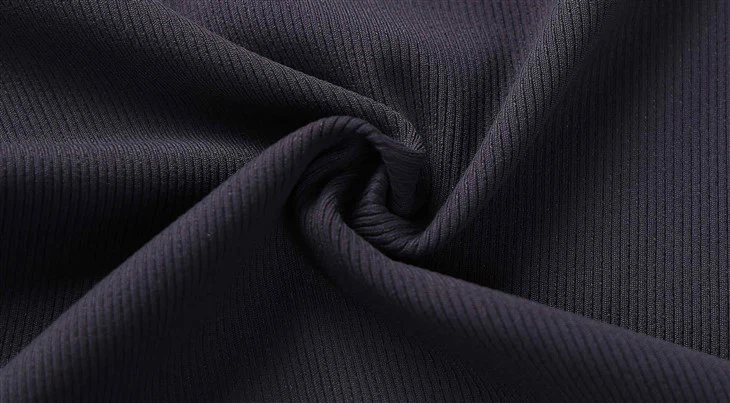

Rib stretch knitting fabric is known for its softness and comfort. The loops of yarn create a more flexible and forgiving structure, which feels great against the skin. It's also very breathable because the spaces between the loops allow air to circulate. This makes it a popular choice for underwear, sleepwear, and other close-to-skin garments.
Woven stretch fabric can also be comfortable, but it might not have the same level of softness as ribbed knitted fabric. However, some woven stretch fabrics are designed with moisture-wicking properties, which can keep you dry and comfortable in hot and sweaty situations. So, if you're looking for fabric for outdoor activities or athletic wear, a moisture-wicking woven stretch fabric could be a good option.
4. Durability
When it comes to durability, both types of fabric have their strengths and weaknesses.
Rib stretch knitting fabric is generally quite durable, but it can be prone to snagging. Since the fabric is made up of loops, a sharp object can easily catch on the loops and pull them out of place, causing runs or holes. However, if you take good care of it, rib stretch knitting fabric can last a long time.
Woven stretch fabric is usually more resistant to snagging because of its woven structure. The interlacing of the warp and weft yarns creates a more stable fabric that is less likely to be damaged by sharp objects. However, the elastic fibers in woven stretch fabric can break down over time with repeated stretching and washing, which can reduce the fabric's stretch and durability.
5. Appearance and Texture
The appearance and texture of rib stretch knitting fabric and woven stretch fabric are also quite different.
Rib stretch knitting fabric has a distinct ribbed texture that gives it a unique look. The ribs can add visual interest to the fabric and can also create a slimming effect in clothing. It has a more casual and cozy appearance, which makes it suitable for a wide range of styles, from streetwear to loungewear.
Woven stretch fabric has a smoother and more uniform appearance. It can have a more polished and professional look, which makes it a popular choice for business casual and formal wear. The texture of woven stretch fabric can vary depending on the type of yarns used and the weaving pattern, but it generally has a more refined feel compared to ribbed knitted fabric.
6. Ease of Sewing
Sewing is an important consideration, especially if you're a DIY enthusiast or a small clothing manufacturer.
Rib stretch knitting fabric can be a bit tricky to sew because of its stretch. You need to use a stretch stitch or a ballpoint needle to prevent the fabric from puckering or stretching out of shape. However, once you get the hang of it, sewing rib stretch knitting fabric can be a lot of fun.
Woven stretch fabric is generally easier to sew than rib stretch knitting fabric. It doesn't stretch as much as ribbed knitted fabric, so you can use regular sewing techniques and needles. However, you still need to be careful when sewing around curves or corners to avoid distorting the fabric.
7. Cost
Cost is always a factor when choosing fabric.
Rib stretch knitting fabric can vary in price depending on the quality of the yarn, the complexity of the ribbing pattern, and the brand. Generally, it's not too expensive, especially if you're buying it in bulk. And since it's so versatile and durable, it can be a great value for your money.
Woven stretch fabric can also vary in price, but it might be more expensive, especially if it's a high-quality fabric with advanced features like moisture-wicking or UV protection. However, if you're looking for a specific look or performance, the extra cost might be worth it.
8. Applications
Both rib stretch knitting fabric and woven stretch fabric have a wide range of applications.
Rib stretch knitting fabric is commonly used in sportswear, such as leggings, yoga pants, and athletic tops. It's also popular for lingerie, baby clothing, and casual wear. The stretch and comfort of ribbed knitted fabric make it a great choice for any garment that needs to move with the body.
Woven stretch fabric is often used in business casual and formal wear, such as stretch dress pants, skirts, and blouses. It's also used in outdoor clothing, workwear, and some types of sportswear. The durability and more refined appearance of woven stretch fabric make it suitable for these applications.
9. Conclusion
So, which is better - rib stretch knitting fabric or woven stretch fabric? Well, it really depends on your needs. If you need a fabric with excellent stretch, comfort, and breathability, and you're not too worried about snagging, then rib stretch knitting fabric might be the way to go. On the other hand, if you're looking for a fabric with a more polished appearance, better durability against snagging, and you don't need as much stretch, then woven stretch fabric could be a better choice.
As a supplier of Rib Knit Fabric, I can offer you a wide range of rib stretch knitting fabric options in different colors, patterns, and qualities. Whether you're a small business owner looking to source fabric for your clothing line or a DIYer in search of the perfect fabric for your next project, I'm here to help.
If you're interested in learning more about our rib stretch knitting fabric or would like to discuss your specific requirements, don't hesitate to reach out. We can have a chat about your needs and find the best fabric solution for you. Let's start a conversation and see how we can work together to bring your ideas to life!
References
- Textile Institute. (2023). Handbook of Textile Fibre Structure. Woodhead Publishing.
- Horrocks, A. R., & Anand, S. C. (Eds.). (2000). Handbook of Technical Textiles. Woodhead Publishing.
